The Era of Natural Beauty: How to Achieve Plastic Surgery That No One Notices
 All articles
Modern plastic surgeons often hear the same request from patients: “I want to look better, but in a way that no one can tell I’ve had surgery.” This is exactly what the term “undetectable” plastic surgery describes — when people around you see that you look great, but cannot clearly identify what has changed.
Current statistics confirm this trend: patients around the world are increasingly choosing subtle enhancements rather than radical transformations — changes that highlight individual features instead of standardizing them.
What Is “Undetectable” Plastic Surgery Really?
When we talk about “invisible” plastic surgery, we don’t mean the absence of surgical intervention, but rather a result that looks organic: the skin is not over-tightened, facial contours retain natural expressiveness, and there is no mask-like appearance or “overfilled” volumes.
Such changes usually harmonize proportions instead of redesigning the face from scratch. Plastic surgeons focus on restoring lost volume while considering not only how the face will look immediately after recovery, but also how it will age over the years.
Why the World Is Shifting Toward Natural Results
Over the past few years, plastic surgeons have noticed a clear change in patient requests. Instead of standardized “Instagram faces,” patients want to look as if they’ve simply returned from a relaxing vacation — not undergone surgery.
Several factors contribute to this shift:
- the rise of “returning to yourself” stories and the dissolution of excessive fillers;
- life “on camera”: video calls and social media, where facial expressions are constantly in motion and unnatural features quickly reveal surgical intervention;
- growing patient awareness: people are increasingly interested in safety, and long-term outcomes, rather than just a fast wow effect.
Studies show that most patients are most satisfied with aesthetic procedures when they experience improved quality of life and self-esteem — without feeling like they’re looking at a “foreign” face in the mirror.
What Methods Help Achieve an “Invisible” Result
Today, undetectable plastic surgery is not a single procedure, but a comprehensive approach. Modern plastic surgeons combine different techniques based on the patient’s anatomy, age, tissue condition, and lifestyle.
- Modern facial lifting techniques — deep SMAS and deep-plane facelifts that work not only with the skin, but with deeper anatomical structures, allowing tissues to be repositioned without an over-tightened look.
- Structural rhinoplasty — nose correction that focuses on preserving the supporting framework rather than radically “reducing” the nose.
- Lipofilling and delicate fillers — instead of heavy volumes, surgeons use the patient’s own fat or low-dose injections to restore the face’s natural contours.
How We Plan “Invisible” Plastic Surgery
To achieve a natural-looking result, preoperative planning is just as important as the procedure itself. During the consultation, we carefully discuss what concerns the patient most (often described as a “tired look,” “sad expression,” or “sagging facial contour”), as well as whether they can realistically commit to a longer recovery period and temporary limitations.
We also address psychological aspects separately: plastic surgery should never be an attempt to “escape from yourself.” Instead, it should be a tool that enhances self-esteem — provided the patient maintains a healthy and realistic self-perception.
Global statistics and the experience of practicing surgeons point to the same conclusion: the future of aesthetic surgery lies in natural, undetectable results that emphasize a person’s individuality.
As a plastic surgeon with many years of experience, I believe my role is not to “change a patient beyond recognition,” but to help you feel confident and attractive. And if, after surgery, people say to you, “You look amazing — did you just get back from vacation?” — that is the highest compliment an undetectable plastic procedure can receive.
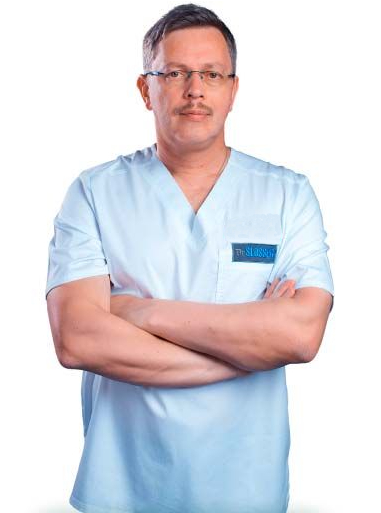
Honored Doctor of Ukraine, Head of the Plastic Surgery Center
Contact me
Plastic surgeon
Ukraine, Kyiv, Shchekavytska St., 9a
(Clinic "Nove Tilo")