What Happens to the Body After Childbirth and How Plastic Surgery Can Help: A Plastic Surgeon’s Perspective
 All articles
Why the Body Changes After Childbirth
After childbirth, a woman’s body goes through significant changes. Some of them are temporary and gradually resolve within the first few months. Others may remain even after returning to a normal routine, regular exercise, and a stable weight.
In my practice, I often meet women who say the same thing: their weight is almost back to normal, yet their body feels and looks different. Most concerns are related to the abdomen, breasts, and overall skin quality.
During pregnancy, the body adapts to the growth of the baby. The skin and abdominal muscles gradually stretch, the position of internal organs changes, and the нагрузка on the back and pelvic floor increases. After delivery, the tissues begin to contract, but this process is not always complete.
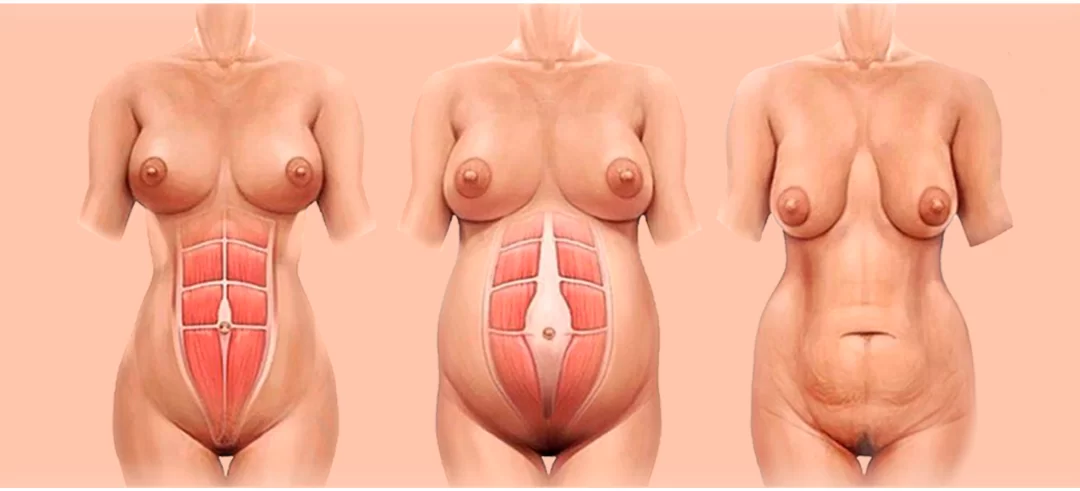
What Is Diastasis Recti and Why the Abdomen May Not “Go Back”
One of the most common concerns is diastasis recti, a separation of the abdominal muscles. In this condition, a gap forms between the muscles, causing the abdomen to appear protruded even in slim women.
Some patients also notice core weakness, lower back discomfort, or a feeling of instability in the central abdominal area. In more pronounced cases, diastasis can affect not only appearance but also posture and physical comfort.
Another common post-pregnancy change is excess abdominal skin. If the skin has been significantly stretched, it may not fully retract on its own. This is why some women continue to notice loose skin, folds, or an overhanging lower abdomen even after losing weight.
Many women spend years trying to address these concerns through exercise alone. Physical activity is extremely important because it helps restore muscle tone, improves circulation, and supports overall health. However, certain changes cannot be corrected through workouts. Exercise cannot remove significant excess skin or repair a pronounced muscle separation.
How the Breasts Change After Pregnancy and Breastfeeding
Breast changes after pregnancy and breastfeeding are another major concern. During pregnancy and lactation, the breasts enlarge because of hormonal changes and milk production. After breastfeeding ends, breast volume often decreases and the tissues become less firm.
As a result, the breasts may lose shape, sag, or become asymmetric. Some women also notice a loss of fullness in the upper portion of the breasts, which can affect the overall body silhouette and the way clothing fits.
Women may also experience:
• localized fat deposits;
• stretch marks;
• a cesarean section scar;
• reduced skin and tissue tone;
• changes in body contours around the waist and hips.
Even at a healthy weight, the body may still look different because of changes in tissue quality and fat distribution.
How Plastic Surgery Can Help
This is where plastic surgery may help.
One of the most common procedures after childbirth is abdominoplasty, or a tummy tuck. During this surgery, excess skin and fatty tissue are removed and separated abdominal muscles are repaired. The goal is to create a flatter and firmer abdominal contour.
If the excess tissue is limited to the lower abdomen, a mini abdominoplasty may be sufficient. In some cases, liposuction can improve body contours, although it is most effective when the skin still has good elasticity.
Breast surgery after pregnancy is also among the most requested procedures. Depending on the patient’s anatomy and goals, this may include:
• a breast lift;
• breast augmentation with implants;
• a breast lift combined with implants;
• fat grafting using the patient’s own fat.
Some women choose a comprehensive post-pregnancy transformation known as a Mommy Makeover. This approach combines several procedures in one surgical stage, most commonly breast and abdominal surgery.
When Is the Right Time for Surgery?
There is no need to rush into surgery after childbirth. The body needs time to recover naturally. In most cases, plastic surgery is recommended no earlier than 6–12 months after delivery.
It is also advisable to wait until breastfeeding has ended and body weight has stabilized. During this period, the tissues gradually reach a more stable condition, allowing for a more accurate evaluation of the surgical plan and expected results.
Another important point is that plastic surgery is not a method of rapid weight loss. Its purpose is to correct physical changes that cannot fully recover on their own.
Plastic Surgery After Childbirth: your new body
Today, more women openly speak about the emotional challenges of accepting their body after childbirth. This is a completely normal conversation to have.
Motherhood does not eliminate the desire to feel attractive, wear favorite clothes, or feel comfortable in front of the mirror.
Plastic surgery does not erase the experience of motherhood or make the body look unnatural. Its role is to help women restore harmonious body proportions and regain physical comfort and confidence.

Honored Doctor of Ukraine, Head of the Plastic Surgery Center
Contact me
Plastic surgeon
Ukraine, Kyiv, Shchekavytska St., 9a
(Clinic "Nove Tilo")