The Rise of Natural Aesthetics: Why Small Breast Implants Became the Top Choice in 2026
 All articles
In my practice, I increasingly notice the same shift: women no longer ask for “big breasts.” They ask for “beautiful breasts.” And this is probably the most accurate way to describe today’s trends in aesthetic surgery.
Just a few years ago, breast augmentation was associated with noticeable results. Today, the request sounds different: to look natural, to fit the body, so that no one can tell surgery was performed—yet the overall appearance becomes more harmonious. That is exactly why small implants have become the top choice for women in 2026.
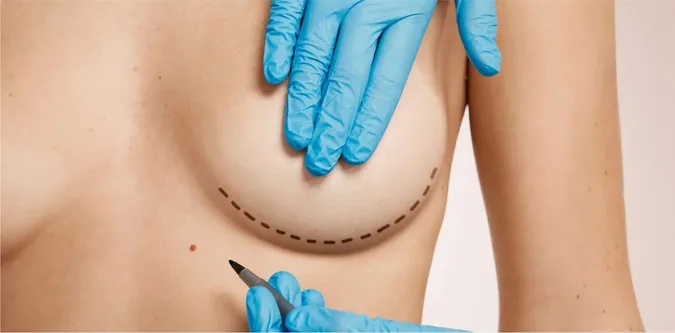
A Modern View of Beauty
In the past, a visibly enhanced appearance was a marker of status: larger volumes, clearly “done” shapes, obvious changes.
Today, the opposite is true. The most “expensive-looking” result is the one that doesn’t read as the result of intervention. This is why small implants are increasingly associated with a higher level of aesthetic culture.
It’s a shift from demonstrative beauty to intelligent beauty. The modern patient doesn’t want to look “done.” She wants to look like herself—just the best version of herself. And in this sense, a smaller implant works far more precisely: it doesn’t transform, it subtly enhances natural proportions.
Not Transformation, but Refinement
From a surgical perspective, smaller implants are also a rational choice because:
- less volume means less strain on the tissues;
- more stable long-term results;
- the breasts maintain their shape longer;
- the risk of tissue stretching is reduced;
- if future correction is needed, it tends to be much simpler.
The Aesthetics of Quiet Luxury
In recent years, the concept of quiet luxury—restraint, quality, and the absence of ostentation—has dominated fashion. This same philosophy has naturally extended into aesthetic medicine.
Small implants are, in many ways, the embodiment of “quiet luxury” in plastic surgery. They don’t draw attention, yet they create an overall impression of refinement, proportion, and harmony.
In addition, patients’ lifestyles have changed. Today’s women are active—sports, travel, a dynamic pace of life. In this context, larger breast volumes often become simply inconvenient, both physically and visually.
A smaller implant, on the other hand, doesn’t feel foreign. It doesn’t restrict movement and looks organic even in the simplest everyday clothing.
New Visual Standards
Social media has played a paradoxical role. At first, it popularized exaggerated appearances, but over time it has also shaped the demand for natural results.
Today, audiences are highly sensitive to anything that looks “artificial.” Overly enhanced features tend to trigger rejection, while natural results are perceived as more modern and attractive.
As a result, patients now come with a different reference point—not “to look like someone else,” but “to look like the best version of my own body.”
Another important shift I’ve observed in recent years is that women are moving away from imposed standards and glossy magazine ideals. They want to like themselves, which is why they opt for subtle, almost imperceptible corrections that enhance their individuality.
That is why the move toward natural aesthetics is not a short-lived trend. The popularity of small implants reflects a deeper change in the perception of beauty: being in harmony with oneself, rather than simply “appealing to others.”
And in my view, this is exactly what plastic surgery should be about—not radically changing a person’s appearance, but delicately enhancing their natural beauty.

Honored Doctor of Ukraine, Head of the Plastic Surgery Center
Contact me
Plastic surgeon
Ukraine, Kyiv, Shchekavytska St., 9a
(Clinic "Nove Tilo")