Modern Blepharoplasty: Everything About Eye Rejuvenation, Procedure Stages, and Recovery
 All articles
The eye area is one of the first to reflect fatigue, stress, and aging. Even with good skin quality, drooping upper eyelids or under-eye bags can create a tired, heavy look. In such cases, blepharoplasty is indicated. It helps restore a fresh, open appearance and can visually take years off the face.
What has changed in modern blepharoplasty
Today, this procedure is very different from approaches used 10–15 years ago. Surgeons no longer follow the principle of simply “removing excess.” The focus is on preserving anatomy, redistributing tissues correctly, and achieving a natural-looking result.
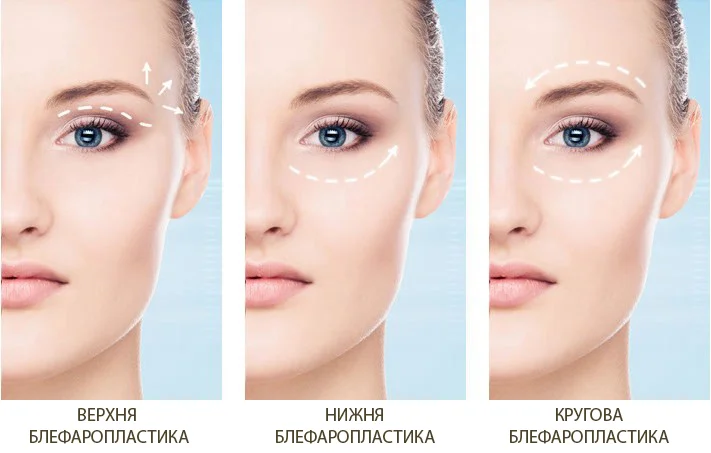
Blepharoplasty may involve:
- upper eyelid correction,
- lower eyelid correction,
- both eyelid correction (combined blepharoplasty).
For the lower eyelid, a transconjunctival approach is often used, meaning no external incisions and no visible scars. In some cases, fat pads are not removed but repositioned to avoid a hollowed appearance. According to the American Society of Plastic Surgeons, blepharoplasty remains one of the most popular procedures worldwide due to its effectiveness and natural results.
When blepharoplasty is not only aesthetic
Many patients come with the goal of looking younger, but functional concerns are often present as well. Excess upper eyelid skin can partially obstruct the field of vision, and constant muscle tension can lead to eye fatigue.
This makes blepharoplasty not only an aesthetic procedure but also a functional one that can significantly improve quality of life.
How the procedure is performed
Technically, blepharoplasty is a predictable procedure, but it requires a high level of precision. We work with delicate structures where every millimeter matters.
Before surgery, careful markings are made considering anatomy, asymmetry, and brow position. Incisions are placed in natural creases, making them nearly invisible after healing. During surgery, tissues are either removed or repositioned to create a refined eyelid contour.
The procedure typically takes 1–2 hours and is performed under local anesthesia with sedation.
Recovery: what to expect
Recovery after blepharoplasty is relatively quick but occurs in stages. In the first days, swelling, bruising, and mild tightness are normal.
These symptoms gradually subside, and within 10–14 days patients usually look socially presentable. Full recovery takes several weeks, with final results evaluated at around 1–2 months. In my experience, these timelines are typical for most patients.
What I always explain to my patients
There are several important factors that determine not only a good result, but also whether the patient will be satisfied with it. First and foremost, blepharoplasty does not dramatically change the shape of the eyes, as the plastic surgeon works with precision on the eyelid skin and/or the under-eye area.
Excessive tissue removal can look unnatural and lead to a “hollow” appearance. A good blepharoplasty result, on the other hand, is when a person looks well-rested rather than operated on.
To achieve the best possible outcome, it is essential for the surgeon to evaluate not only the eyelid skin, but also the position of the eyebrows and the overall condition of the facial skin.
Conclusion
Modern blepharoplasty is about precision and subtlety. It does not change who you are but removes the features that create a tired appearance. The result is a more open, refreshed look while preserving your natural eye shape and individuality.

Honored Doctor of Ukraine, Head of the Plastic Surgery Center
Contact me
Plastic surgeon
Ukraine, Kyiv, Shchekavytska St., 9a
(Clinic "Nove Tilo")