Revision Plastic Surgery: What to Do If You Are Unhappy with the Results of a Previous Procedure
 All articles
In plastic surgery, the final outcome of a procedure depends not only on the skill and experience of the plastic surgeon. Individual characteristics of the patient’s body, tissue-healing processes, age-related changes, and personal expectations also play an important role. Even a flawlessly performed procedure does not always guarantee complete satisfaction with the result, as the perception of one’s appearance is highly subjective. Sometimes patients realize that the changes they envisioned differ somewhat from the actual outcome.
In addition, the final result of a plastic surgery procedure develops gradually. During the recovery process, tissues heal, swelling subsides, scar tissue forms, and the body adapts to the changes. It is during this stage that individual healing characteristics may become apparent, and these cannot always be fully predicted in advance.
In some cases, after the rehabilitation period has been completed, a patient may consider additional refinement of the result. This is not necessarily related to shortcomings of the initial procedure, as the reasons may include individual healing characteristics, natural changes in appearance over time, or a desire to refine or modify the outcome according to personal aesthetic preferences.
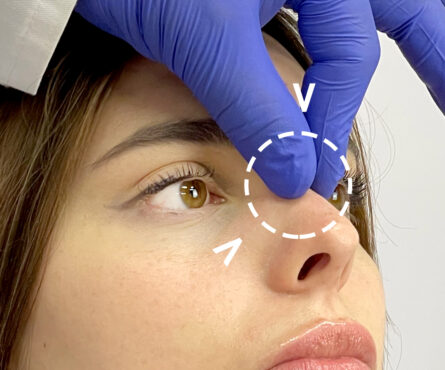
The Most Common Reasons for Seeking Revision Plastic Surgery
The reasons for considering revision surgery can vary and may depend both on individual biological factors and on a patient’s personal expectations. In some cases, revision is related to changes that occurred during the healing process or developed over time, while in others it is driven by a desire to refine or modify the original outcome.
Patients most commonly seek revision procedures in the following situations:
• the aesthetic result differs from what was expected;
• tissue changes or age-related changes in appearance have occurred over time;
• functional concerns have developed (for example, difficulty breathing after rhinoplasty);
• scars, asymmetry, or other postoperative changes have formed;
• aesthetic preferences or expectations regarding the desired result have changed.
In every case, the decision to undergo a revision procedure should be made individually after evaluating the outcome of the previous surgery, the condition of the tissues, and the patient’s expectations.
Which Procedures Most Commonly Lead Patients to Consider Revision Surgery?
According to international studies, rhinoplasty and breast augmentation account for the highest number of revision procedures. However, this does not mean that these operations are more likely than others to be unsuccessful. Rather, they are procedures whose outcomes are significantly influenced by individual healing characteristics, natural changes in the body over time, and the patient’s personal perception of their appearance.
Following primary rhinoplasty, revision surgery is considered in approximately 10–15% of cases. Most commonly, this is related to scar formation, tissue changes during healing, or a patient’s desire to achieve a different aesthetic outcome. At the same time, the majority of patients who undergo successful revision rhinoplasty report substantial improvements in both appearance and nasal function. Studies indicate satisfaction rates ranging from 75% to 97% following revision rhinoplasty.
Breast augmentation is another category in which additional procedures are relatively common over a patient’s lifetime. According to various studies, up to 30–36% of patients may undergo additional surgery after breast augmentation during long-term follow-up. In most cases, this is not due to dissatisfaction with the initial result but rather to age-related changes in breast shape, weight fluctuations, pregnancy and breastfeeding, capsular contracture, or a desire to change implant size or achieve a more natural appearance.
Which Procedures Have the Highest Patient Satisfaction Rates?
Interestingly, breast augmentation consistently demonstrates some of the highest patient satisfaction rates in plastic surgery. In certain studies, up to 98% of women reported that the outcome met or even exceeded their expectations.
In contrast, rhinoplasty remains one of the most challenging procedures from the standpoint of patient satisfaction. Because the nose occupies a central position on the face, even subtle changes can significantly influence the perception of appearance. In addition, the final result continues to develop for up to a year or even longer.
For this reason, patients are generally advised not to rush into a decision regarding revision surgery. In most cases, revision rhinoplasty should not be considered until at least 12 months after the initial procedure.
What Should You Do If You Are Unhappy with the Result?
The first step is to discuss your concerns with the plastic surgeon who performed the procedure. Some perceived imperfections may be related to swelling or the natural healing process and may resolve completely over time.
If the issue genuinely requires correction, it is advisable to seek an independent consultation with a specialist experienced in revision surgery. It is important to understand that revision procedures are almost always more complex than primary operations. The surgeon must work with altered tissues, scar tissue, and anatomy that has already been modified. This is why revision surgery requires especially careful planning and realistic expectations.
In most cases, modern plastic surgery offers sufficient opportunities to correct or significantly improve the result of a previous procedure. The key is to accurately identify the cause of dissatisfaction, allow the recovery process to be fully completed, and entrust the correction to an experienced surgeon who specializes in revision procedures.

Honored Doctor of Ukraine, Head of the Plastic Surgery Center
Contact me
Plastic surgeon
Ukraine, Kyiv, Shchekavytska St., 9a
(Clinic "Nove Tilo")