Nanolipofilling as an Alternative to Fillers: Why Your Own Cells Are Better Than Hyaluronic Acid
 All articles
Modern aesthetic medicine is increasingly moving toward regenerative approaches—procedures that not only fill wrinkles or add volume but restore tissues from within. One of these technologies is nanolipofilling, a technique that uses a patient’s own fat tissue to rejuvenate the skin and improve its quality.
In plastic surgery practice, this approach is considered a more physiological alternative to injectable fillers, since the body receives not a foreign substance but its own cells. To understand why nanolipofilling is attracting so much attention from physicians today, it is important to look at the differences between this method, classical lipofilling, and hyaluronic acid–based fillers.
Classical lipofilling: natural restoration of volume
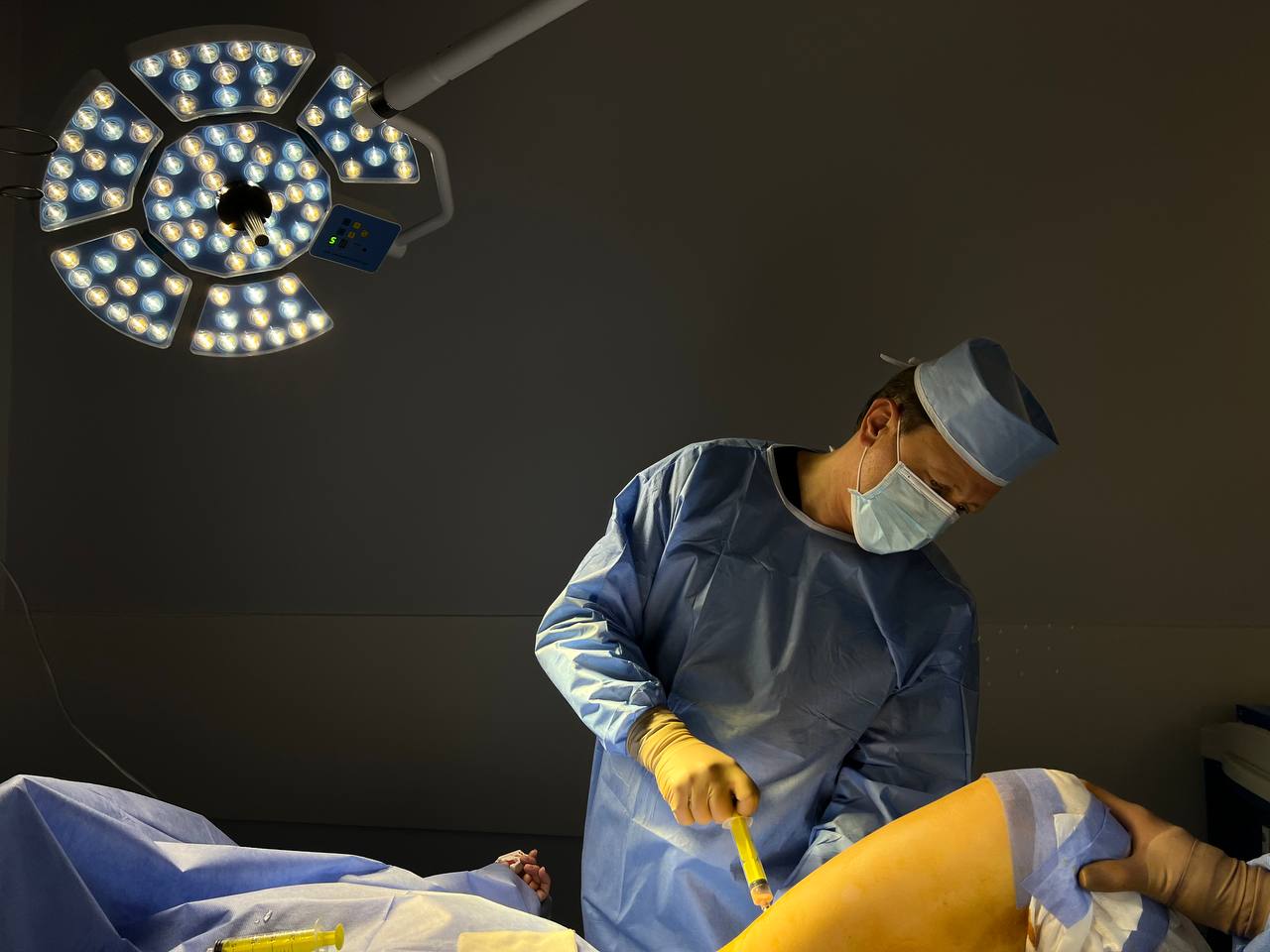
Lipofilling is a technique of transplanting the patient’s own fat tissue, which has been used in plastic and reconstructive surgery for several decades. The procedure begins with harvesting a small amount of fat (liposuction) from donor areas—most commonly the abdomen, thighs, or flanks. The harvested material is then purified and injected into areas where volume needs to be restored.
The main purpose of classical lipofilling is to compensate for tissue loss that occurs with age. For this reason, the procedure is often used to correct the cheekbones, cheeks, and nasolabial folds, or to rejuvenate the hands. After transplantation, part of the fat tissue integrates into the body’s tissues and survives. Some cells may be resorbed over time, but those that remain provide a long-lasting result.
Thus, classical lipofilling primarily functions as a natural volumizing filler. It restores facial contours and allows surgeons to achieve a softer, more natural-looking result compared with synthetic materials.
Nanolipofilling: a focus on regeneration
Nanolipofilling represents an evolution of classical lipofilling. The key difference lies in the preparation of the fat tissue. After harvesting, the fat undergoes a special processing technique: it is repeatedly filtered and emulsified, resulting in an extremely fine and homogeneous suspension known as nanofat.
In this material, large fat cells that normally provide volume are almost completely absent. Instead, other important components of adipose tissue remain—stromal cells, mesenchymal stem cells, and numerous growth factors. These elements are responsible for the regenerative effects of the procedure.
For this reason, nanolipofilling is not used to create volume but to improve skin quality. Nanofat injections stimulate collagen and elastin production, improve microcirculation, and promote tissue regeneration. As a result, the skin becomes denser, smoother, and more radiant.
Most often, this technique is used to rejuvenate delicate areas of the face—particularly the region around the eyes, where fillers do not always produce predictable results. Nanolipofilling has also proven effective in correcting fine wrinkles, dark circles under the eyes, and scars.
How your own cells differ from fillers
Hyaluronic acid–based fillers have become one of the most common procedures in aesthetic medicine due to their immediate results and relatively simple application. They make it possible to quickly restore lost volume or refine the shape of specific facial areas. However, their mechanism of action differs significantly from techniques based on the patient’s own fat tissue.
Hyaluronic acid acts as a volumizing agent: it physically fills a wrinkle or creates volume within the tissues. Over time, the substance is gradually broken down by the body’s enzymes, which is why the effect typically lasts from six to eighteen months.
Nanolipofilling works in a different way. Here, cells and biologically active substances play the key role by stimulating the body’s natural regenerative processes. As a result, the effect appears gradually: the skin becomes denser, its structure improves, and the overall tone looks healthier.
Another important difference lies in biological compatibility. Since the patient’s own tissue is used, the risk of allergic reactions or rejection is extremely low. This is precisely what makes lipofilling and its modern modifications particularly attractive from a safety standpoint.
Why regenerative techniques are becoming the new standard
In modern aesthetic medicine, a combined approach is increasingly common. When rapid restoration of facial shape or contour is required, fillers remain an effective tool. However, when the goal is to improve skin quality and achieve long-term rejuvenation, techniques based on the body’s own cells demonstrate significantly greater potential.
This is why interest in nanolipofilling continues to grow. The technology makes it possible to address not only the external signs of aging but also the condition of the tissues themselves. In essence, this represents a shift from simply masking age-related changes to biologically restoring the skin.
Today, adipose tissue is considered one of the richest sources of stem cells in the human body. Thanks to these cells, nanolipofilling opens new possibilities for natural rejuvenation—where results are achieved not through foreign substances but through the body’s own regenerative resources.

Honored Doctor of Ukraine, Head of the Plastic Surgery Center
Contact me
Plastic surgeon
Ukraine, Kyiv, Shchekavytska St., 9a
(Clinic "Nove Tilo")