How to Get Rid of a “Tired Look” Before Returning to Your Autumn Work Routine
 All articles
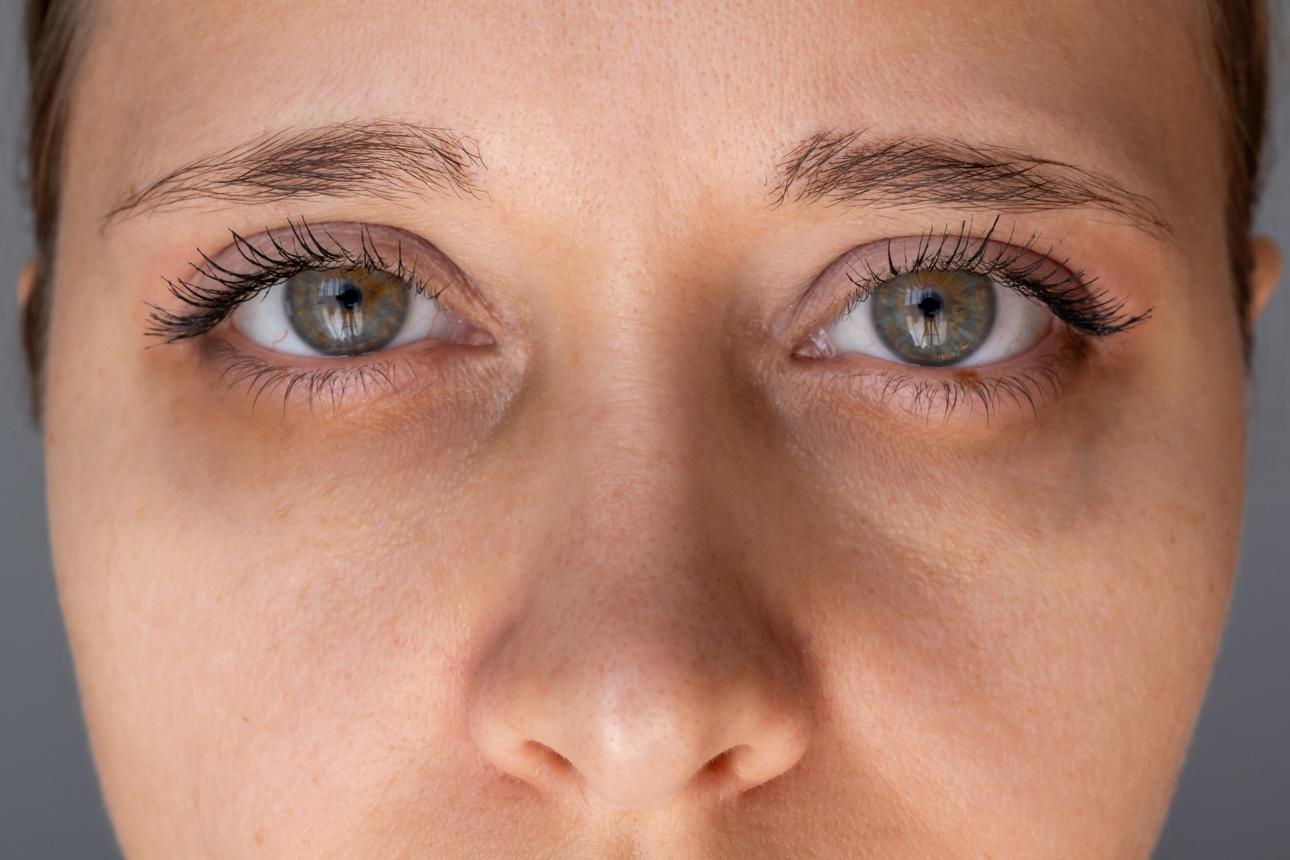
After summer, we often return to our usual schedule with the feeling that our face has become tired before we have. Puffiness under the eyes, dark circles, hooded upper eyelids, or pronounced under-eye bags can make the eyes look noticeably less refreshed. But it is important to understand that similar-looking concerns can have very different causes, and therefore require different approaches.
What Is a “Tired Look”?
A “tired look” is not a medical diagnosis. It is a general term used to describe visible changes around the eyes that can make a person look older, tired, or as though they have not had enough sleep.
In many cases, several factors are involved: puffiness, dark circles, excess skin on the upper eyelids, protruding fat pads beneath the eyes, age-related skin changes, or anatomical features that may be noticeable even at a young age. Heredity, allergies, fluid retention, insufficient sleep, and smoking can also affect the appearance of this area.
This is why the first rule I would recommend to my patients is simple: do not try to treat a “tired look” until you understand what is actually causing it.
Broadly speaking, the causes can be divided into several groups:
- temporary changes: lack of sleep, fluid retention, allergies, excessive salt intake;
- anatomical features: a deep tear trough, prominent fat pads, a genetic tendency toward dark circles;
- age-related changes: excess skin, weakening of the supporting tissues, and protrusion of fatty tissue;
- changes requiring further assessment: drooping of the upper eyelid, thyroid disease, and certain ophthalmic or other medical conditions.
Why Can the Eyes Look Tired?
With age, the tissues that support the eyelids gradually become weaker. The skin loses some of its elasticity, while the fatty tissue surrounding the eyeball may shift forward and create the characteristic bulges beneath the eyes. Fluid can also accumulate in this area, making puffiness more noticeable, particularly in the morning.
However, not every under-eye bag is caused by ageing. In some people, these bags are largely determined by anatomy and genetics. This is why someone in their twenties can have pronounced fat pads beneath the eyes, while an older person may still have a relatively smooth under-eye area.
Dark circles are a separate issue. They can be associated with pigmentation, skin characteristics, genetics, fatigue, or shadows created by puffiness or a depression beneath the eye. In other words, a darker appearance does not necessarily mean that the problem is the colour of the skin itself.
What Can Be Done Without Surgery?
If the changes appear mainly after a lack of sleep, air travel, consuming a large amount of salty food, or during an allergic reaction, surgery is certainly not the place to start.
Adequate sleep, a cool compress, moderate salt intake, and sleeping with the head slightly elevated may help reduce temporary puffiness. If the swelling is related to allergies, the underlying cause should be addressed.
However, it is important to have realistic expectations. A cream cannot remove a fat pad that is anatomically protruding beneath the lower eyelid. Likewise, skincare products cannot remove excess skin from the upper eyelid.
Injectable and energy-based treatments may be appropriate in selected cases. For example, laser treatments can improve skin quality, while dermal fillers are sometimes used to correct hollows beneath the eyes. However, a filler does not remove an actual fat pad. It may instead alter the relationship between a hollow and a protruding area. The appropriate approach therefore depends on the individual anatomy.
This is where a common mistake can occur: a patient sees a dark shadow beneath the eye and assumes that a filler is needed, when in fact the shadow is caused by protruding fatty tissue. In another patient, the situation may be exactly the opposite.
When Should Blepharoplasty Be Considered?
Blepharoplasty, or eyelid surgery, is performed to correct excess skin, fatty tissue, and certain other age-related changes of the eyelids. It can be performed on the upper eyelids, lower eyelids, or both.
Upper blepharoplasty is most commonly considered when excess skin creates a fold over the upper eyelid. In some people, this excess skin can even partially restrict the peripheral field of vision. At the same time, it is important to distinguish excess skin from ptosis, which is drooping of the eyelid itself due to impaired function of the muscle that lifts it. These are different conditions and require different surgical approaches.
Lower blepharoplasty is primarily used to address protruding fatty tissue, excess skin, and other changes affecting the lower eyelid. In some patients, the fat is not completely removed but repositioned to create a smoother transition between the lower eyelid and the cheek.
A fundamental principle of modern blepharoplasty is that the goal should not be to remove as much tissue as possible. Excessive fat removal can create an unnaturally hollow appearance. The surgeon's task is not to make the eyelid as “empty” as possible, but to restore a more harmonious contour.
Blepharoplasty or Non-Surgical Correction?
|
Concern |
Possible cause |
Common approaches |
|
Morning puffiness |
Fluid retention, sleep, allergies |
Adequate sleep, cool compresses, allergy treatment |
|
Dark circles |
Pigmentation, thin skin, shadows from anatomical hollows |
Skincare, treatment of pigmentation, and in selected cases injectable or laser treatments |
|
Hollow under the eye |
Volume loss or an anatomical feature |
Individually selected volume correction |
|
Pronounced under-eye bags |
Protruding fat pads |
Lower blepharoplasty |
|
Excess upper-eyelid skin |
Age-related or anatomical changes |
Upper blepharoplasty |
|
Drooping of the eyelid itself |
Ptosis |
A specialised procedure rather than simple skin removal |
The same complaint can have several different causes. The final decision should therefore be made after an in-person assessment by a plastic surgeon, taking into account the anatomy of the eyelids, brow position, skin condition, and, when necessary, the eyes themselves.
Can Surgery Be Performed Before Autumn?
Yes, but it should not be planned on the assumption that you will “look great by next Monday.”
Swelling, bruising, irritation, dry eyes, and discomfort are normal after blepharoplasty. Their severity and duration vary from person to person. In my experience, many patients need around two weeks before returning to work, although this depends on the nature of their job and the course of their recovery. The American Society of Plastic Surgeons notes that most patients look sufficiently well to return to normal social activities after approximately 10–14 days, although complete healing takes longer.
Therefore, if someone is considering surgery before the start of a busy working season, I would not recommend leaving only a few days between the procedure and an important professional event. It is better to allow sufficient time, as bruising and swelling are natural responses to surgery and cannot be predicted precisely.
How Is Blepharoplasty Performed?
The procedure can be performed under local or general anaesthesia, depending on the extent of surgery, the patient's individual circumstances, and the decision of the surgical team. In many cases, patients can leave the clinic on the same day.
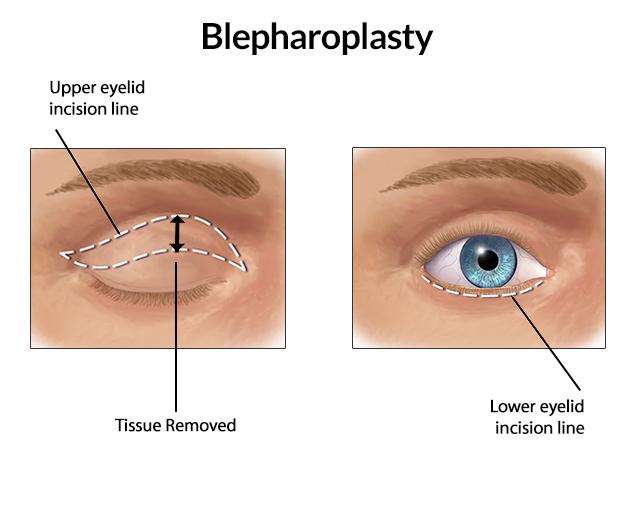
During upper blepharoplasty, the incision is usually placed within the natural crease of the upper eyelid, so once healed, the scar is located in a relatively inconspicuous area.
There are several approaches to the lower eyelid. An incision may be made directly beneath the eyelashes when excess skin also needs to be addressed. Alternatively, access to the fat pads can be obtained through the inner surface of the lower eyelid, through the conjunctiva. This approach leaves no external scar but is not suitable for every patient.
The choice of technique should not be based on a desire to perform a “more modern” procedure. It should be determined by which tissues actually need to be corrected.
What Happens After Surgery?
During the first few days, swelling and bruising are the most common effects. Dryness, watering of the eyes, irritation, and temporary blurred vision may also occur. To relieve discomfort, a plastic surgeon may recommend cold compresses, specific ointments, or lubricating eye drops. Physical activity and swimming are usually restricted during the recovery period. The exact timing depends on the extent of surgery and the surgeon's recommendations.
It is important to distinguish between the point at which a patient can return to work and the point at which the tissues are fully healed. After blepharoplasty, the appearance continues to change as the swelling subsides. The final result may take several months to develop.
Blepharoplasty is a common surgical procedure, but that does not mean it is free of risks. This is why I do not recommend choosing a plastic surgeon based solely on before-and-after photographs. It is much more important to consider the surgeon's training and experience, where the procedure will be performed, how postoperative follow-up is organised, and what will happen if a complication occurs.
What Would I Recommend Before the Start of the Autumn Season?
If the changes have appeared recently, I would start not with surgery but with an assessment of the underlying causes. Improving sleep, controlling allergies, reducing fluid retention, and maintaining appropriate skincare can significantly improve the appearance of the eyes when the problem is functional or temporary.
If, however, under-eye bags, excess skin, or eyelid hooding persist regardless of how well you sleep, it is worth having an in-person consultation with a plastic surgeon who regularly performs eyelid surgery. If necessary, an ophthalmologist or oculoplastic surgeon may also be involved in the assessment.
And most importantly, the goal of eyelid surgery should not be to change the shape of the eyes or make the face look “Instagram-perfect.” In my view, good blepharoplasty should remove the features that create a tired appearance while preserving the natural anatomy of the face.
Frequently Asked Questions About Blepharoplasty
Is it necessary to have upper and lower blepharoplasty at the same time?
No. The upper and lower eyelids are assessed separately. If the problem affects only the upper eyelids, there is no need to perform lower blepharoplasty, and vice versa.
Sometimes both areas genuinely require correction, but this should be determined by the patient's anatomy rather than by a desire to perform a more extensive procedure.
Can under-eye bags be removed without surgery?
If the issue is temporary puffiness, often yes. If the cause is persistent protrusion of the fat pads, however, creams and home remedies will not remove it. In such cases, lower blepharoplasty is one of the most effective options.
Does the fat under the eyes always have to be removed?
No. In modern eyelid surgery, fat can be removed when appropriate, but it can also be repositioned or redistributed. Excessive removal of fatty tissue can result in a hollow appearance, so the amount of correction should always be determined individually.
Will there be scars after the surgery?
After upper blepharoplasty, the scar is usually located within the natural crease of the eyelid. With certain lower blepharoplasty techniques, the incision is made on the inner surface of the eyelid, so there is no external scar. When an external skin incision is required, the scar is placed close to the lash line.
When can I return to work?
This depends on your occupation and how quickly you recover. As a general guide, it is worth allowing around two weeks if you want to return to work without noticeable bruising and swelling. For people working from home or without regular face-to-face interaction, the period may be shorter.
When will I see the final result?
The first changes become visible as the swelling begins to subside, but the final result develops gradually. Complete healing may take several months.
Can I have blepharoplasty if I frequently experience dry eyes?
This should always be discussed with your doctor before surgery. Dry eye symptoms may become more pronounced after the procedure, while the condition of the ocular surface and the ability of the eyelids to close completely are important considerations for surgical safety.
Can a “tired look” be caused by something other than the eyelids?
Yes. For example, drooping eyebrows or upper-eyelid ptosis can create a similar appearance but require a different approach. This is why a consultation should assess not only the eyelid skin but also the position of the eyebrows, eyelid movement, and the overall anatomy of the area.

Honored Doctor of Ukraine, Head of the Plastic Surgery Center
Contact me
Plastic surgeon
Ukraine, Kyiv, Shchekavytska St., 9a
(Clinic "Nove Tilo")