Endoscopic Lift vs. Weekend Lift: What Patients Choose After 35
 All articles
After the age of 35, most patients begin to notice the first visible signs of aging: drooping eyebrows, deeper nasolabial folds, loss of a well-defined facial contour, the appearance of jowls, and a tired look even after adequate rest. It is at this stage that many people start considering surgical facial rejuvenation, but often face a difficult choice: an endoscopic lift or the so-called Weekend Lift.
As a plastic surgeon with many years of experience, I see that patients are increasingly seeking natural-looking results rather than dramatic changes, along with the shortest possible recovery period. This is why both procedures are highly popular today. However, there are significant differences between them that should be understood before making a decision.
What Is a Weekend Lift?
A Weekend Lift is a minimally invasive surgical rejuvenation procedure designed to correct the early signs of aging in the lower third of the face, particularly in the cheek area, along the jawline, and around the chin. The procedure is performed through small incisions near the ears, typically takes between one and a half and two hours, and is less traumatic than a traditional facelift.
The main advantages of a Weekend Lift include:
- a relatively short procedure time;
- a faster recovery period;
- minimal tissue trauma;
- natural-looking results without an “overly pulled” appearance.
In most cases, patients can return to their normal daily activities within 7–10 days after surgery.
This technique is most commonly recommended for patients between the ages of 40 and 50 who have begun to notice the first noticeable signs of aging, such as loss of facial definition, decreased skin elasticity, and mild tissue sagging.
Despite its minimally invasive nature, a Weekend Lift is still a full surgical procedure that requires careful preparation and adherence to postoperative recommendations. Like any surgical intervention, it carries certain risks, including swelling, bruising, and potential complications if recovery guidelines are not properly followed. For this reason, choosing an experienced plastic surgeon is one of the key factors in achieving a successful outcome.
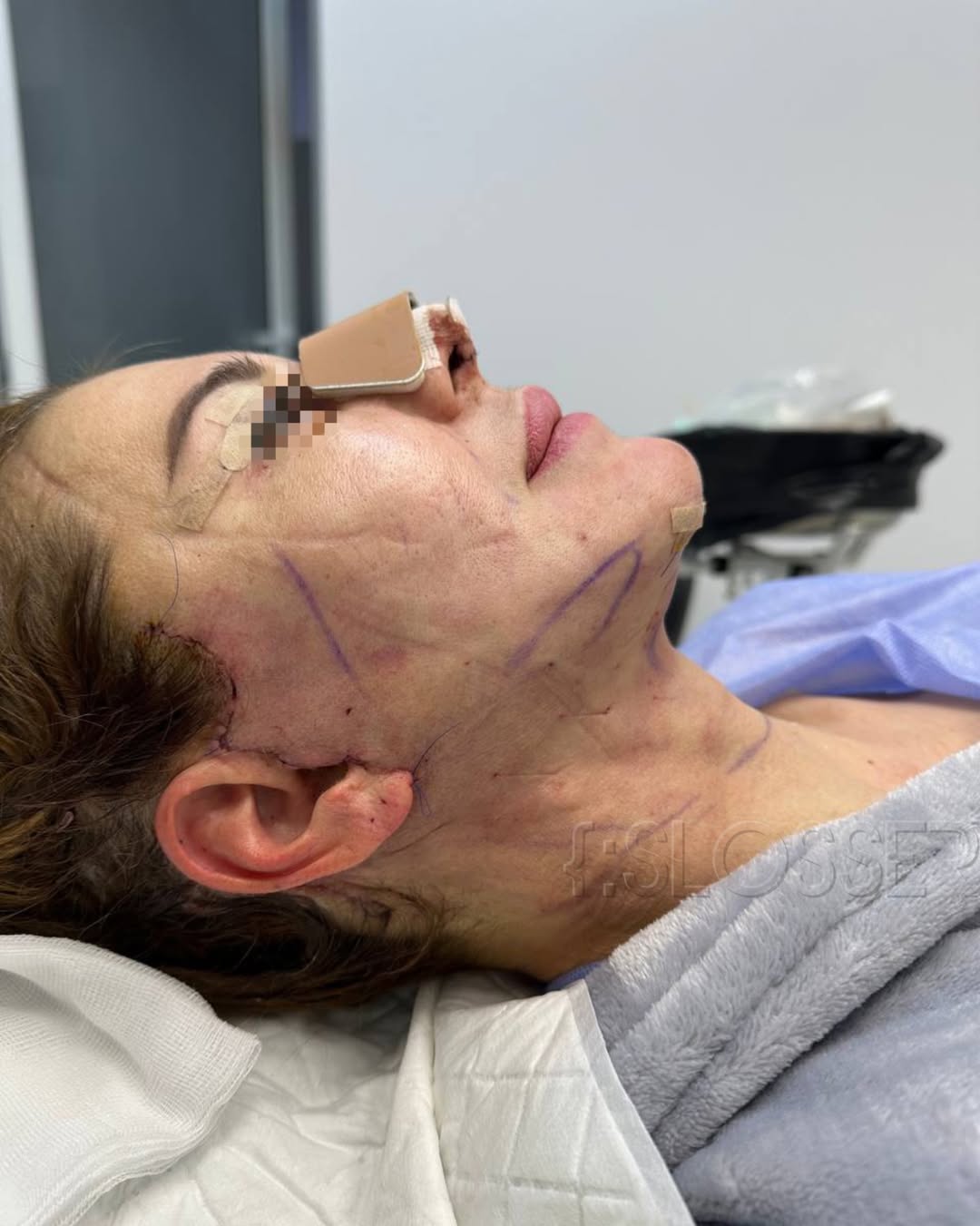
What Is an Endoscopic Lift?
An endoscopic lift is a modern facial rejuvenation technique performed through small incisions hidden within the hair-bearing scalp using a specialized endoscopic camera. Thanks to magnified visualization, the surgeon can operate with exceptional precision while minimizing tissue trauma.
An endoscopic lift is particularly effective for rejuvenating the upper and middle thirds of the face, including:
- brow elevation;
- correction of tissue hooding around the eyelids;
- enhancement of the cheekbone area;
- reduction of nasolabial folds;
- restoration of youthful facial contours.
This is why searches for “endoscopic facial lift Kyiv” remain among the most common among both male and female patients aged 35 to 50.
Why Is an Endoscopic Lift Called a Scarless Facelift?
Naturally, any surgical procedure involves incisions. However, with endoscopic techniques, the incisions are typically only 1–2 cm long and are strategically placed behind the hairline. Once healed, they are virtually invisible, even to the patient.
For this reason, many surgeons and patients refer to the procedure as a “scarless facelift,” meaning that there are no visible postoperative scars on the face itself.
For many active individuals, this becomes a decisive factor when choosing surgery.
Minimally Invasive Facial Plastic Surgery: A Modern Trend or the New Standard?
Over the past decade, aesthetic surgery has undergone significant transformation. While facelifts were once associated with extensive incisions and lengthy recovery periods, today’s patients expect natural-looking outcomes with minimal downtime.
As a result, minimally invasive facial plastic surgery has become one of the leading directions in modern aesthetic surgery. Endoscopic techniques allow surgeons to work not only on the skin but also on the deeper facial structures, addressing the true causes of age-related tissue descent.
As a result, the face appears younger while preserving individuality and natural facial expressions.
What Do Patients Choose After 35?
In my practice, the choice between a Weekend Lift and an endoscopic lift depends primarily not on a patient’s chronological age, but on facial anatomy and the degree of age-related changes. A Weekend Lift is generally an ideal solution for individuals aged 35–45 who exhibit only early signs of aging, mild tissue laxity, and good skin elasticity.
By contrast, an endoscopic lift is more frequently recommended for patients aged 35–55 who already demonstrate early to moderate midface ptosis, brow descent, upper eyelid hooding, deepening nasolabial folds, or loss of volume in the cheek area. This is why an increasing number of patients over 35 choose endoscopic procedures as a long-term investment in their appearance, as these techniques not only refresh facial features but also effectively address the underlying causes of aging at a deeper structural level.
Which Procedure Provides Longer-Lasting Results?
As a rule, a Weekend Lift delivers a more modest and shorter-lasting effect compared to a full endoscopic lift.
The reason is straightforward: an endoscopic procedure repositions and secures deeper facial tissues rather than simply tightening the skin. Consequently, the outcome appears more natural and typically lasts significantly longer.
Conclusion
If your primary goal is to achieve a refreshed appearance and correct minimal signs of aging with minimal downtime, a Weekend Lift may be an excellent option.
However, if you are seeking more comprehensive and long-lasting facial rejuvenation without visible scarring and with the most natural-looking results possible, an endoscopic lift remains one of the most effective procedures in modern aesthetic surgery.
The most important thing is not to focus solely on the name of the procedure. The best outcomes are achieved when the surgical approach is selected individually by a plastic surgeon following a thorough consultation and detailed analysis of the patient’s facial anatomy.
FAQ
At what age should I start considering surgical facial rejuvenation?
The decision depends not so much on age as on individual aging patterns. Many patients begin considering surgical facial rejuvenation procedures after the age of 35–40, when the first noticeable signs of tissue sagging, loss of facial definition, or deepening nasolabial folds begin to appear.
What is the difference between a Weekend Lift and an endoscopic lift?
A Weekend Lift is primarily designed to address early age-related changes in the lower third of the face and is associated with a shorter recovery period. An endoscopic lift, on the other hand, targets the upper and middle thirds of the face, allowing correction of brow position, the cheek area, and tissues around the eyes. The recovery period is longer.
Will there be visible scars after facial rejuvenation surgery?
All surgical procedures involve incisions. However, modern techniques allow surgeons to place them in discreet locations, such as around the ears, within natural skin creases, or inside the hairline. Once fully healed, the scars are usually barely noticeable.
How long does recovery take after a facelift procedure?
Recovery time depends on the chosen technique and the patient’s individual healing process. Following minimally invasive procedures, many patients can return to social activities within 7–10 days, while more extensive surgeries may require a longer recovery period.
Can a facelift be combined with other aesthetic procedures?
Yes. To achieve more comprehensive rejuvenation, facelift procedures are often combined with blepharoplasty, fat grafting, submental liposuction, or injectable treatments.
How natural are the results of modern facial rejuvenation surgery?
Modern plastic surgery focuses on harmonious rejuvenation rather than altering a person’s facial features. When the appropriate technique is selected, patients can achieve a fresher, more youthful appearance while preserving their natural facial expressions and individuality.
How can I determine which facial rejuvenation procedure is right for me?
Choosing the most suitable facial rejuvenation technique requires a consultation with a plastic surgeon. During the evaluation, the surgeon assesses skin quality, the degree of age-related changes, facial anatomy, and the patient’s expectations in order to recommend the most effective treatment approach.

Honored Doctor of Ukraine, Head of the Plastic Surgery Center
Contact me
Plastic surgeon
Ukraine, Kyiv, Shchekavytska St., 9a
(Clinic "Nove Tilo")